
Introduction to Computational Biology
Course Code
BIOS 11141 20
Course Description
What can a person’s genome reveal? Could it predict the diseases they may develop? Modern biology produces vast amounts of data, and analyzing this data requires mathematical and computational approaches. The first part of the course is devoted to biological information and the models and computational techniques used to make sense of it. Major advances in understanding how life works at the molecular level have revolutionized biology. The interactions of large molecules (macromolecules) produce functioning organelles and cells, and molecular mishaps lead to disease. The second part of the class is devoted to the structure and function of macromolecules and the computational models to visualize and quantify the properties of these molecules.
Students will learn how to apply cutting-edge high performance computation to analyze biological data. The primary assessment in this course centers around a final project. Students will use our in-house supercomputer to process and analyze genomics data with a specific focus on identifying variants relevant to disease.
The culmination of the course will involve writing a report on their findings and analyses.
Course Criteria
Prerequisite: BIOS 10130 or BIOS 10140. Students must have successfully completed one year of high school science course (Biology, Chemistry, or Physics). Some experience with programming computer languages is needed (intro level and/or self-taught okay). This course fulfills the second quarter of the biology general education requirement.
Instructor(s)
Esmael Jafari Haddadian
Other Courses to Consider
These courses might also be of interest.
 Inquiry-based Exploration of Biology
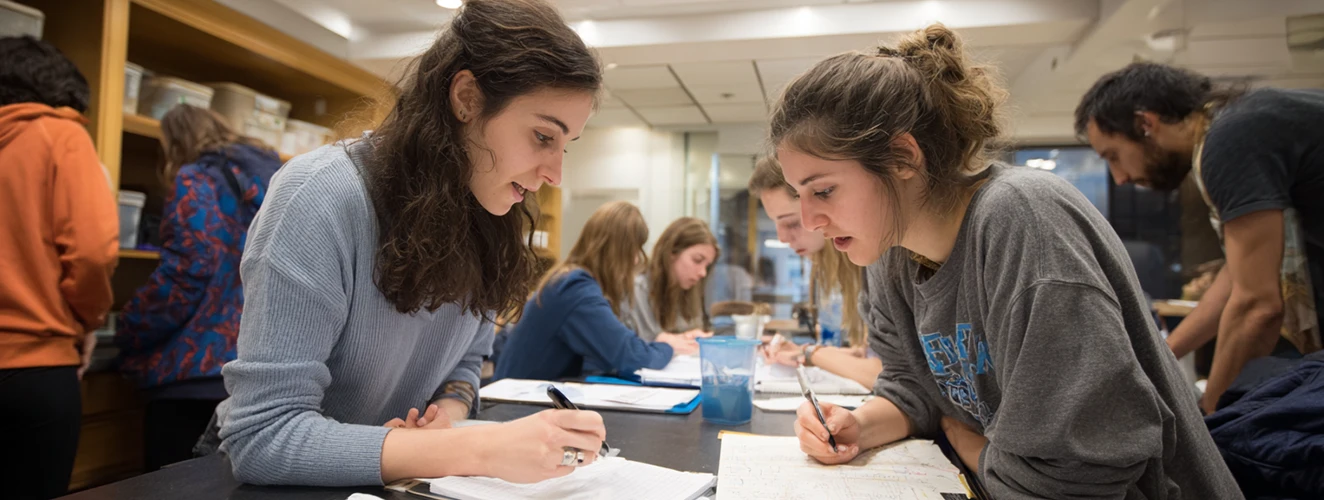
In this course students will be able to conduct their own research projects to experience how biologists frame questions and test hypotheses. This inquiry-based approach permits students to learn fundamental biological principles while carrying out scientific experiments and expanding our knowledge of living systems.
Classes will take place in the lab, integrating lectures, discussions, and experiments in active sessions, thus eliminating the separation between theory and practice.
Students will also have an opportunity to develop communication skills during the quarter, presenting their proposals and results to their peers and instructors. Each course instructor will focus their section on a different major problem in the biological sciences that will frame the students' research questions.
Residential