
Exoplanets
Course Code
ASTR 12720 20
Cross Listed Course Code(s)
PHSC 12720 20
Course Description
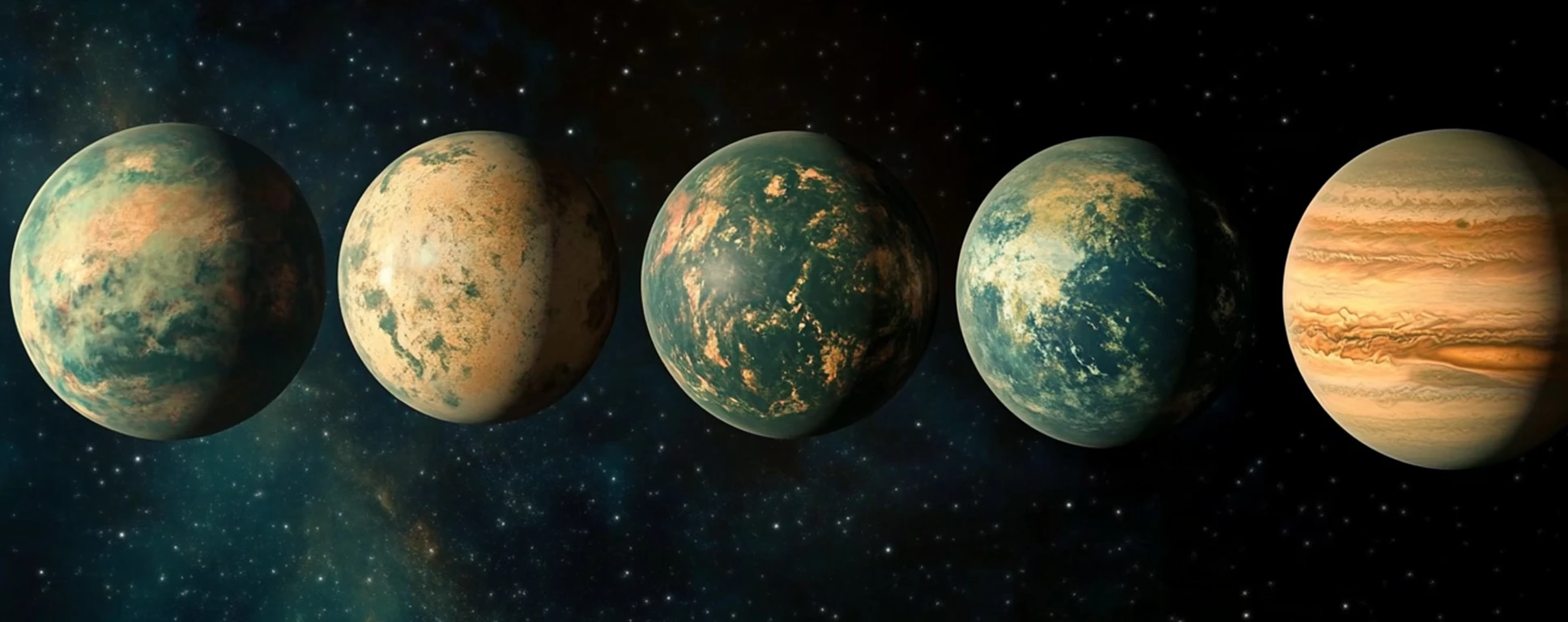
The past two decades have witnessed the discovery of planets in orbit around other stars and the characterization of extra-Solar (exo-) planetary systems. We are now able to place our Solar System into the context of other worlds and a surprising conclusion that most planetary systems look nothing like our own.
A challenging next step is to find planets as small as the Earth in orbit around stars like the Sun. The architecture of planetary systems reflects the formation of the parent star and its protoplanetary disk, and how these have changed with time.
This course will review the techniques for discovery of planets around other stars, what we have learned so far about exoplanetary systems, and the driving questions for the future, including the quest for habitable environments elsewhere.
This course includes labs. Although quantitative analysis will be an important part of the course, students will not be expected to employ mathematics beyond algebra.
Course Criteria
Prerequisites: PHSC 10800 or PHSC 10100 or ASTR/PHSC 12700 or ASTR/PHSC 12710.
This course combined with one of the pre-requisites listed above form a sequence that fulfills the gen ed requirement in the Physical Sciences. It can also be used by students in the Minor in Astronomy and Astrophysics program.
Instructor(s)
Derek Buzasi
Other Courses to Consider
These courses might also be of interest.
 Stars
StarsAt the beginning of the 20th century, two astronomers: Ejnar Hertzprung and Henry Norris Russell independently took catalogues of stars and plotted their brightness as a function of their color. The result, now known as the HR diagram, was to become one of the most influential diagrams in astrophysics. It showed that, contrary to one's naive expectation, the distribution of stars was highly structured. The efforts to understand the HR diagram extended for the better part of the 20th century and paralleled the development of modern physics. In this course we will use the HR diagram as a starting point to address two fundamental questions: what is a star? And how does it evolve? This will be a scientific journey in which we will describe the physical processes determine the inner workings of stars. How they manage to be so hot, so bright and so remarkably long lived1. We will explain how stars drive the chemical evolution of the universe by assembling heavier elements out of lighter ones. Why some stars at the end of their lives become white dwarfs and slowly fade away (die with a whimper) while others end their lives in spectacular explosions know as supernovae that are so bright that can be seen clear across the universe (die with a bang). The sun is as bright as 100 million, million, million, million 40 Watts light bulbs. It burns 400 million metric tons of hydrogen per second. Yet, it has been doing that for 4.5 billion years and will continue to do so for another 4.5 billion years. Pretty impressive, wouldn't you say?
Remote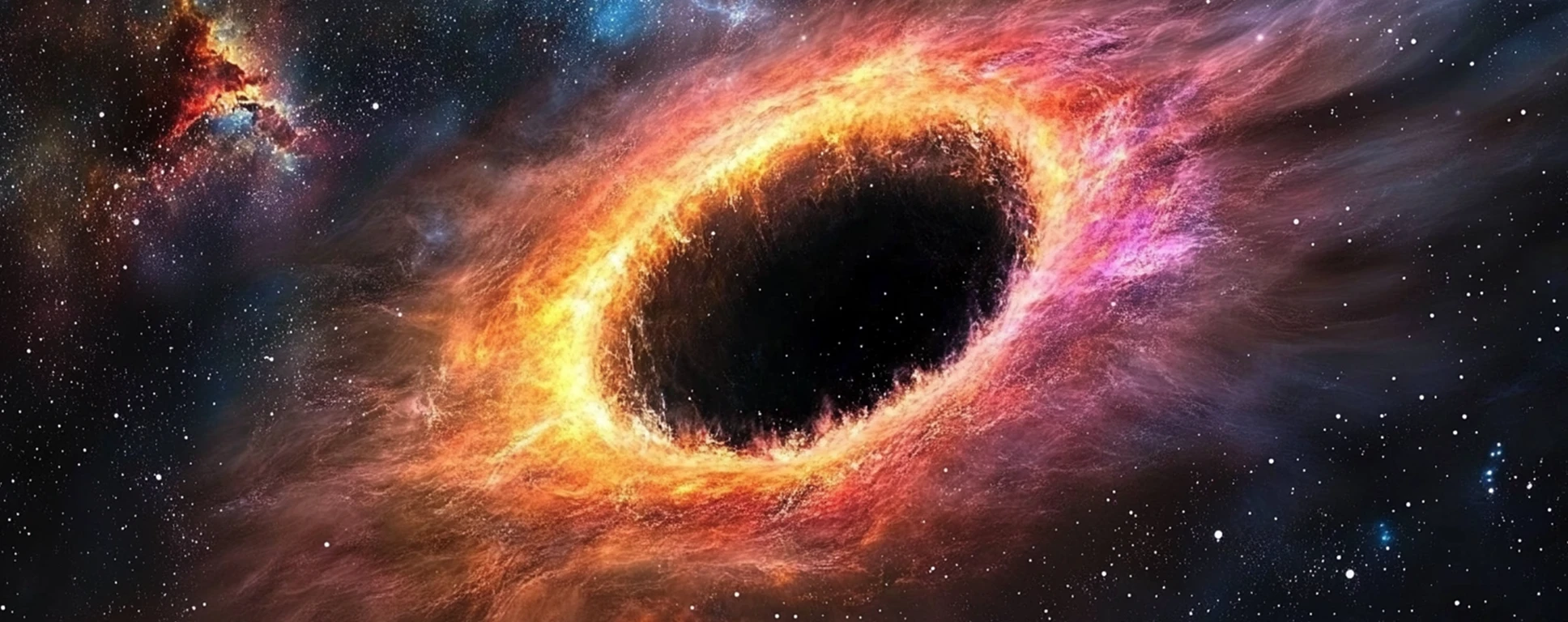 Black Holes
White dwarfs, neutron stars and black holes, the so-called compact objects, are among the most remarkable object in the universe. Their most distinctive feature which ultimately is the one responsible for their amazing properties is their prodigiously high density. All compact objects are the product of the final stages of stellar evolution. White dwarfs have masses comparable to that of the Sun but with the size of the Earth, they come from "smallish" stars that run out of nuclear fuel and settle down to a quiet life of slowly fading away. Neutron stars and black holes come from much more massive stars that end their lives in a spectacular explosion known as a supernova. In a neutron star the mass of the Sun is concentrated in the size of a city. The density is so high that even electron and proton get squished together to form neutrons (hence the name). In a black hole the density is so high that nothing can counter gravity and eventually the collapsing star folds the space-time around itself and disappears inside a "surface of no return”- the event horizon. In this course we will address the progenitor problem--which stars become which compact object. We will examine the properties of each type of compact object and address the issue of their remarkable structure. For the case of black holes, we will see that they are completely geometrical, and in some real sense, the most perfect objects in the universe.
Remote On Time and Space
This studio course focuses on the fundamentals of pre-production, production, and post-production techniques using digital video.
"On Time and Space" is primarily concerned with how patterns of techniques and formal logics interact and shape our experience of space and time. We will engage in creative and technical studies, individual projects, readings and screenings that focus on the organization and technical realization of content as well as its interpretation. Videography, lighting, sound design, and editing are taught through concepts and methodologies drawn from fine art, documentary, and narrative film and video making considered across different viewing platforms.
The goal is for students to understand how the experience of space and time can be shaped in the film medium. Students will leave the course with a grasp of the conventional and self-invented techniques filmmakers use.
Remote