

Econometrics
Course Code
ECON 21020 10
Course Description
This course covers the single and multiple linear regression model, the associated distribution theory, and testing procedures; corrections for heteroskedasticity, autocorrelation, and simultaneous equations; and other extensions as time permits. Students also apply the techniques to a variety of data sets using PCs. This course is required of UC students who are majoring in economics. Those students are encouraged to meet this requirement by the end of their third year.
Course Criteria
Prerequisite(s): ECON 20100/20110; ECON 21010 or STAT 23400/24400/24410 and MATH 19620 (or MATH 20000 or STAT 24300 or MATH 20250). Enrollment limit is 30.
This course is open to all undergraduates and is included in the Summer Institute in Social Research Methods.
Instructor(s)
Murilo Ramos
Other Courses to Consider
These courses might also be of interest.
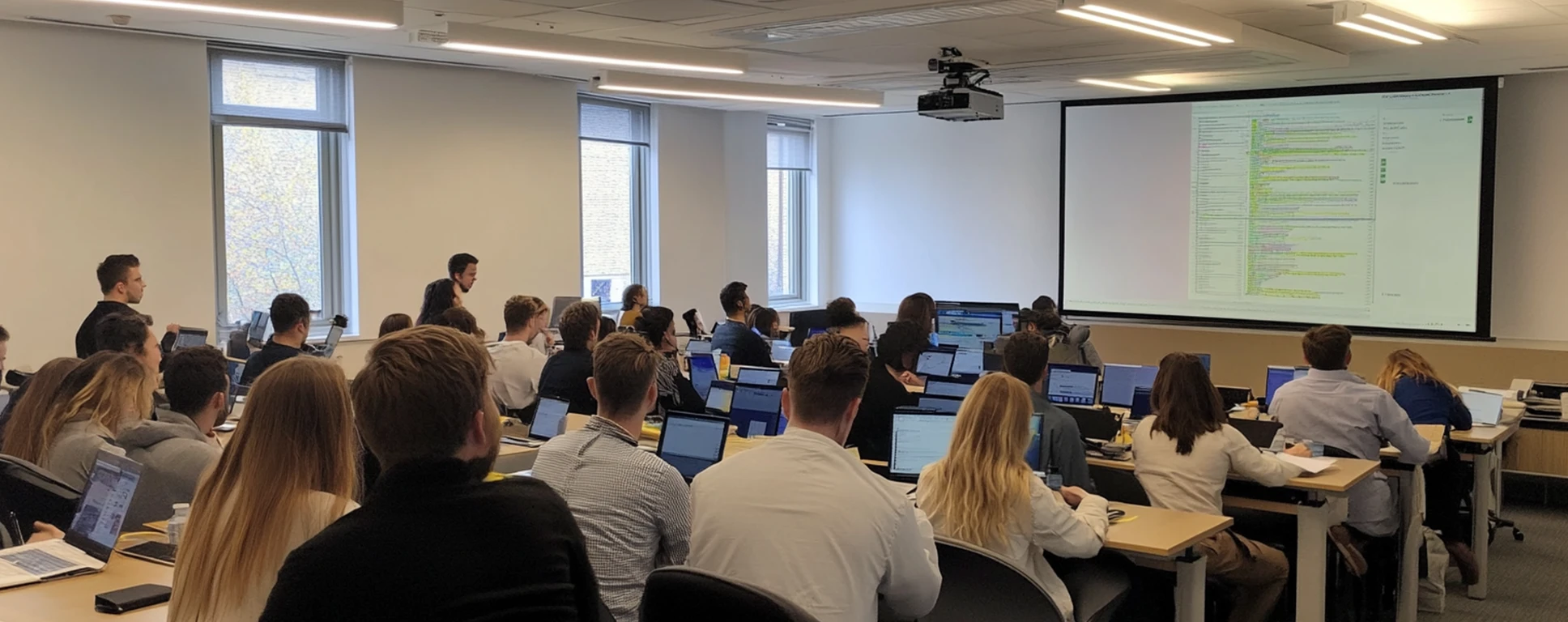 Introduction to Econometrics
The objective of this course is to introduce students to the practice of econometrics.
The course will focus on the use of multiple regression as a tool to establish causal relations.
The course emphasizes all steps of the process of empirical research: data collection, analysis, and presentation, both written and oral. Multiple examples of this process will be discussed.
You will be expected to read and evaluate existing research. You will apply the techniques discussed in class to a topic of your choosing. You will write a paper and present your results to the class.
Residential Introductory Statistical Methods and Applications for the Social Sciences
This course introduces and applies fundamental statistical concepts, principles, and procedures to the analysis of data in the social and behavioral sciences. Students will learn computation, interpretation, and application of commonly used descriptive and inferential statistical procedures as they relate to social and behavioral research. These include z-test, t-test, bivariate correlation and simple linear regression with an introduction to analysis of variance and multiple regression.
The course emphasizes understanding normal distributions, sampling distribution, hypothesis testing, and the relationship among the various techniques covered, and will integrate the use of R as a software tool for these techniques.
By the end of the course, the student will be able to (1) differentiate, utilize and apply statistical description and inference to applied research in behavioral sciences or other disciplines, (2) understand and be able to utilize various forms of charts and plots useful for statistical description, (3) understand and utilize the concept of statistical error and sampling distribution, (4) use a statistical program for data analysis, (5) select statistical procedures appropriate for the type of data collected and the research questions hypothesized, (6) distinguish between Type I and Type II errors in statistical hypothesis testing, (7) understand the concepts of statistical power and the influence of sample size on inference, and (8) summarize and write up the results.
Remote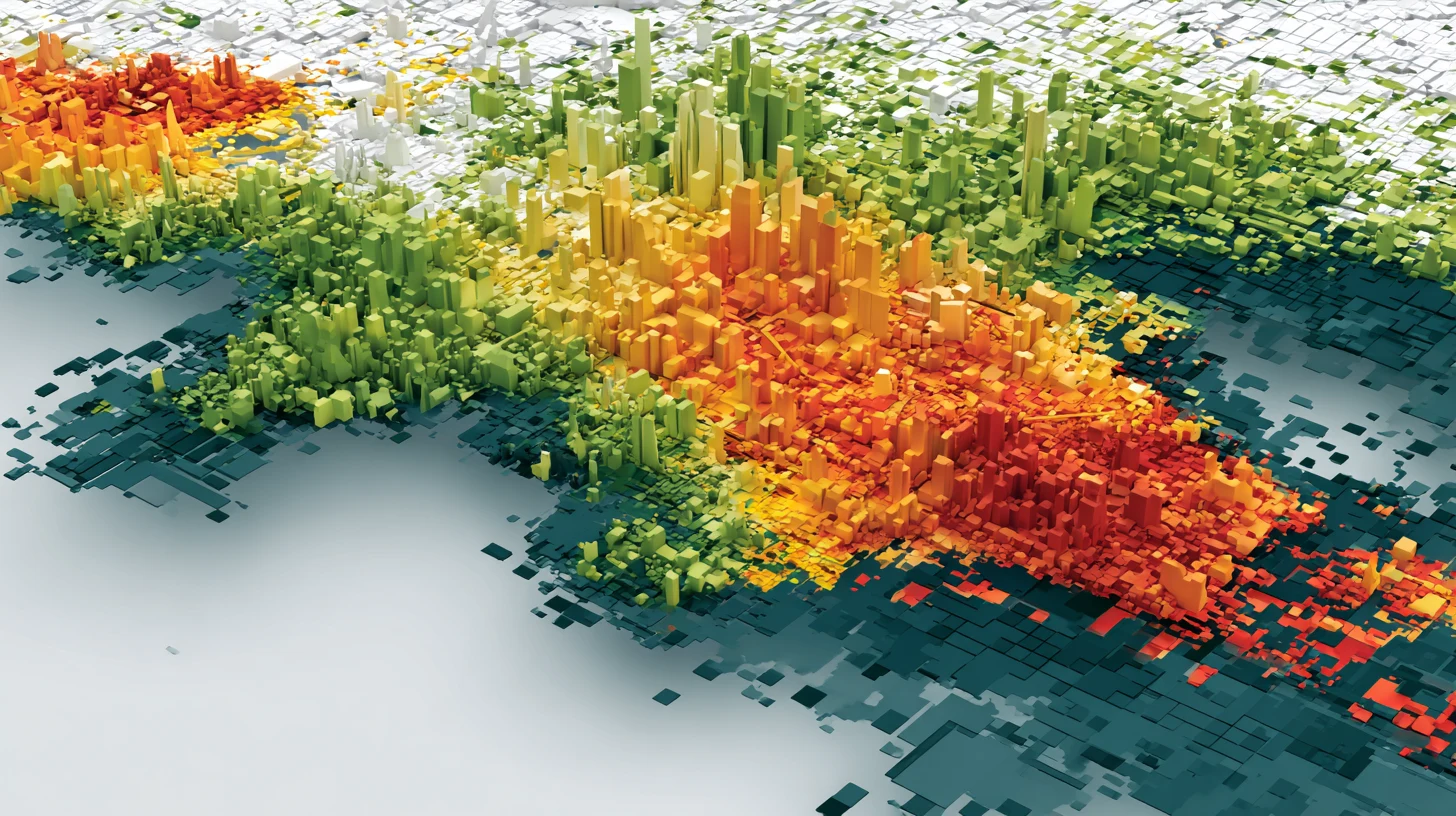 Introduction to GIS and Spatial Analysis
This course provides an introduction and overview of how spatial thinking is translated into specific methods to handle geographic information and the statistical analysis of such information. This is not a course to learn a specific GIS software program. The goal is to learn how to think about spatial aspects of research questions, as they pertain to how the data are collected, organized and transformed, and how these spatial aspects affect statistical methods. The focus is on research questions relevant in the social sciences, which inspires the selection of the particular methods that are covered. Examples include spatial data integration (spatial join), transformations between different spatial scales (overlay), the computation of “spatial” variables (distance, buffer, shortest path), geovisualization, visual analytics, and the assessment of spatial autocorrelation (the lack of independence among spatial variables). The methods will be illustrated by means of open source software such as QGIS and R.
Residential