
The Global Political Economy: Power and Inequality (remote)
Course Description
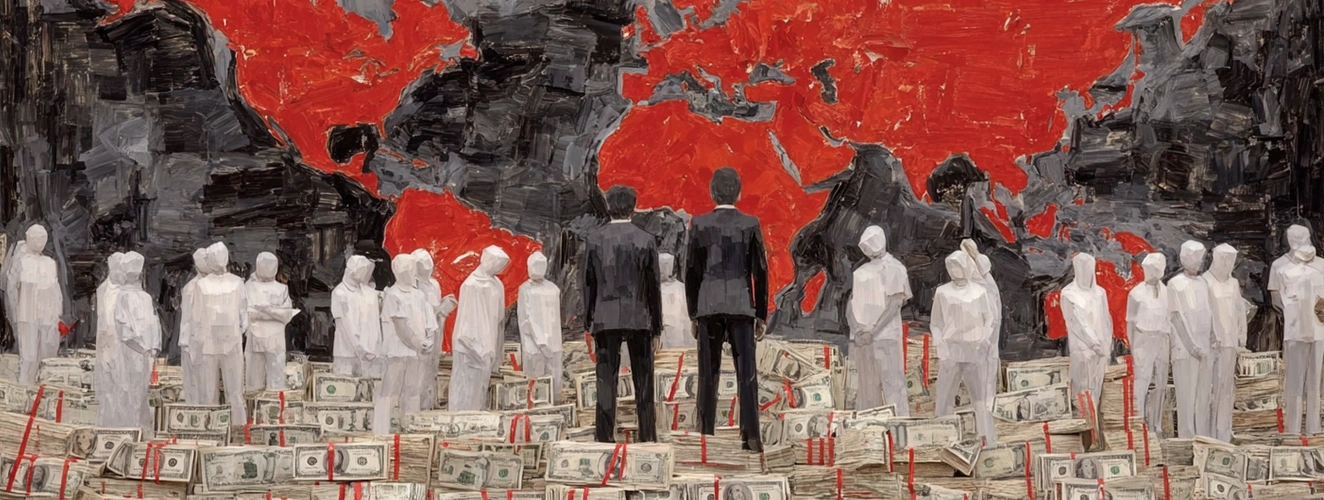
Since the 1970s, economic inequality has been steadily rising. According to the World Inequality Report, the world’s richest 10% now hold 75% of total global wealth while the bottom half owns just 2%. The picture is even more lopsided in the United States, where three individuals alone own more wealth than the bottom half of the country combined.
This course makes the argument that, far from being natural or inevitable, socio-economic inequality is created when ordinary people are deprived of the means to provide for themselves. As we will see, this dispossession (and the resulting transfer of wealth from the many to the few) has historically come about through a combination of violence wielded by the strong on the weak and the working of institutions that reflect the interests of powerful actors. Drawing on the work of political economists, historians, journalists, and activists, we will examine the world-historic causes of socio-economic inequality (such as the roles played by capitalism, colonialism, and chattel slavery), how inequality intersects with identity markers like gender and ethnicity, and the ways in which the climate crisis is pushing the haves and have-nots even further apart.
In closing, we will consider how reorienting our economies for “use” as opposed to “profit” may help to reverse this tendency.
Course Criteria
Students should be prepared to take a deep dive into economic trends as it relates to history and politics.
Academic Interest
Economics and Business, Examining Culture and Society, Law and Politics, Social Sciences (e.g., history, psychology, sociology)
Application Materials
A complete application includes a transcript, two short essays, a letter of recommendation, writing sample, application fee, and a submitted parent confirmation. If you are seeking need-based financial aid, you must indicate that in your application before it is submitted. Please refer to the Application Instructions for complete details.
Instructor(s)
Fahad Sajid
Cost
$4,980