

Religion and Unbelief
Course Description
What does it mean to be religious? What does it mean to be critical of religion? What does it mean to have a religious critique? Can one be spiritual but not religious? Can one lack religion?
In this course, we will try to answer these questions by critically analyzing the terms “religion,” “secularism,” “spirituality,” and “atheism” to better understand how they each shape allegiances and dividing lines in contemporary social and political life. In the first part of the course, we will examine classical and contemporary approaches to religion and unpack how and why religion became an object of academic as well as political study. In the second part, we will explore the history of secularism as a philosophical and political project that has shaped our present reality, as well as consider scholarly approaches that attempt to “speak back” to secularism’s global influence. Finally, we will interrogate what it might mean to claim to be spiritual but not religious, or to be an atheist, while exploring how these claims relate to the problem of secularism.
As we work through course material, you will also conduct your own ethnography in the Hyde Park area through a series of site visits, as well as consider the politics of religion and unbelief through film and object-based learning.
Academic Interest
Examining Culture and Society, Humanities (e.g, arts, literature, philosophy), Social Sciences (e.g., history, psychology, sociology)
Application Materials
A complete application includes a transcript, two short essays, a letter of recommendation, writing sample, application fee, and a submitted parent confirmation. If you are seeking need-based financial aid, you must indicate that in your application before it is submitted. Please refer to the Application Instructions for complete details.
Instructor(s)
Sam Baudinette
Cost
$9,300
Other Courses to Consider
These courses might also be of interest.
 The Philosophy of Life and Death
The focus of this course will be how philosophy arises in response to problems in the conditions of human life, especially our mortality and the prevalence of social injustice.
Every one of us will die one day; and every one of us suffers from and/or helps perpetuate some form of injustice. These can be sources of alienation, suffering, and bad choices; they can also be sources of conviction, bravery, and wisdom.
We will aim to understand how philosophy fits into this picture, and especially how a person can use philosophy to find meaning for their life in relation to both death and injustice. Topics will include how the fear of death affects us in life, the prospect of “critical” consciousness in relation to death, and understanding the political dimensions of life & death.
We will discuss ancient texts and figures, such as Plato’s Socrates and the Buddha, as well as contemporary philosophical work and social issues in the US and elsewhere.
Residential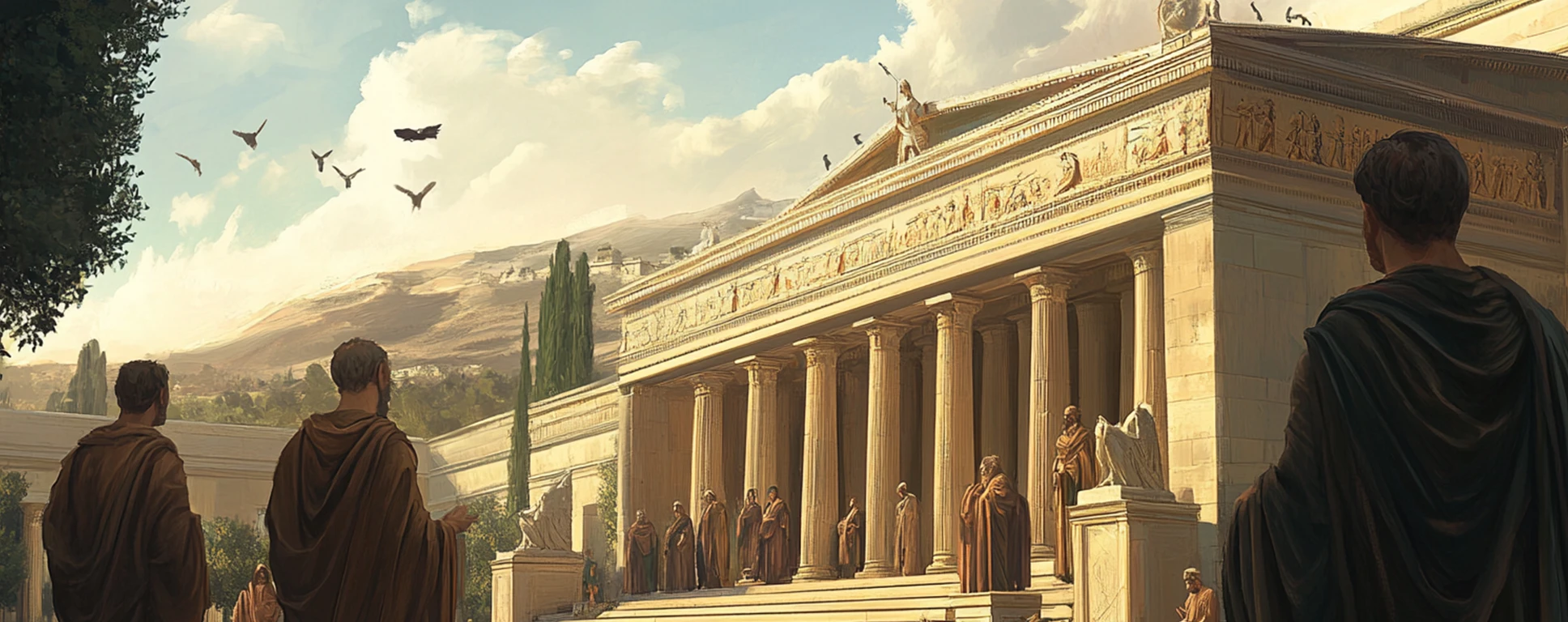 The World of Greek Philosophy
This course will serve as an introduction to ancient Greek philosophy and literature of the pre-Classical, Classical, and Hellenistic Greek world, and their conceptions that at once influence and differ from our own. In addition to discussing traditional Greek understandings of virtue, honor, and happiness, we will consider how intellectual life was believed to help people find meaning, purpose,and self-fulfillment and shape their ethics. We will recreate the experience of Greek intellectual culture in simulated marketplace disputations and (nonalcoholic) symposia while reading and discussing works from Pre-Socratics, Plato, Aristotle, Sophocles, Euripides, Euclid, and the Stoics, in an effort to understand not just what but how they thought.
Residential