
Quantitative Evaluation for Public Policy - Session 1
Course Description
How do we know whether a policy delivers its promised results or falls short? If it delivers, how do we know whether it was by chance or a true result that would replicate in a similar setting? If it is a true result, will it scale if implemented more broadly?
This course is designed for enterprising high school students who want to work at the frontiers of data analysis, using the tools that economists and other social scientists use to determine the causal effects of different actions and make more informed decisions.
You will be introduced to the basic toolkit of quantitative policy analysis, which includes probability theory, sampling, hypothesis testing, regression, experiments, differences in differences, and regression discontinuity. You will also learn how to use a statistical software program to organize and analyze data. Most importantly, you will learn the principles of critical thinking essential for careful and credible policy analysis.
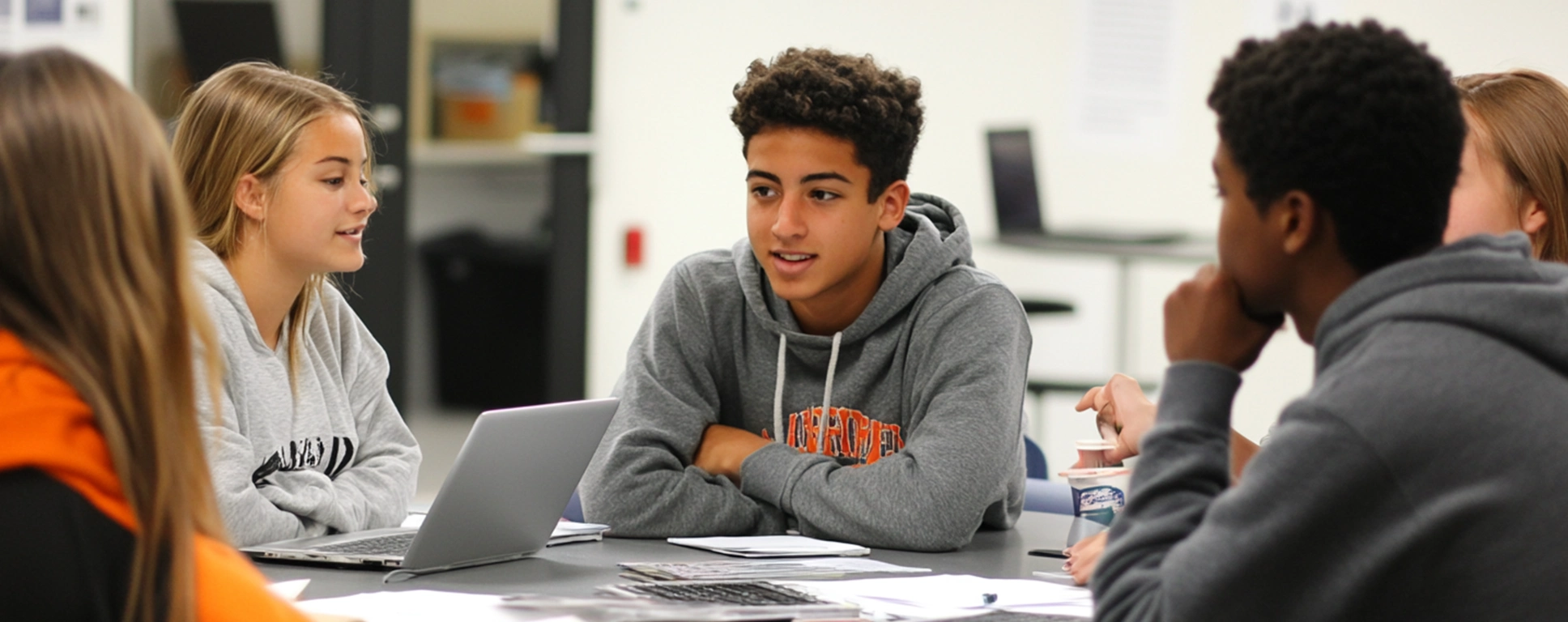
The goals of this course will be realized through various course activities including lectures, labs, group assignments and final presentations.
Course Criteria
This course is only open to high school students.
Students should have completed Algebra 2 and have a strong interest in using math to determine economic patterns to be successful in this course.
Prior coding experience is not required; having some familiarity with coding (especially in R) would be helpful.
Academic Interest
Technology (e.g., Computer Science, Molecular Engineering), Computer Science, Data Science, Math, and Statistics, Economics and Business, Social Sciences (e.g., history, psychology, sociology)
Application Materials
A complete application includes a transcript, two short essays, a letter of recommendation, writing sample, application fee, and a submitted parent confirmation. If you are seeking need-based financial aid, you must indicate that in your application before it is submitted. Please refer to the Application Instructions for complete details.
Instructor(s)
Sheng-Hao Lo
Cost
$9,300
Other Courses to Consider
These courses might also be of interest.
 Pathways in Data Science
In a world increasingly driven by information, data science has emerged as an all-encompassing term to describe the process of collecting, processing, analyzing, and drawing conclusions from data. The ability to use data science tools and understand their foundations is crucial for those who wish to engage with the greatest challenges in modern society.
This course introduces students to the full data science pipeline—question formulation, data collection, storage, computation, visualization, inference, prediction, and communication. In addition to lectures, labs, discussions, and visits by guest speakers, students will learn Python and Jupyter Notebooks and complete a capstone project using real-world data.
Residential Introduction to Macroeconomic Models
This course offers a comprehensive exploration of neoclassical macroeconomic models. Students will develop an in-depth understanding and analytical skills through frameworks and applications. The course emphasizes how these models explain economic growth, business cycles, and policy implications in modern economies.
The course is divided into five key modules:
(i) economic growth and production,
(ii) consumption and savings,
(iii) business cycles and unemployment,
(iv) fiscal policy, and
(v) monetary policy and forecasting.
Throughout each module, we extensively utilize relevant data to enhance the understanding of theoretical concepts. By the end of the course, students will be able to interpret macroeconomic news and articles and analyze policies through a model-based framework.
Residential Economics from an Experimental Perspective - Session 1
A growing field in which the University of Chicago has been a leader, experimental economics uses experimental methods (i.e. observing everyday interactions and decisions made by people either in the lab or in the field) to explore economic questions ranging from how markets and other exchange systems work to what motivates people to make decisions about matters such as conserving environmental resources or donating to charitable causes. You will participate in laboratory experiments and discuss the results, thereby learning the underlying economic principles and the economic questions that the experiments were designed to address. You will also engage in solving specific economic problems both individually and in a group.
Residential