

Creative Writing
Course Description
"What is education?" asks the philosopher Søren Kierkegaard: "I suppose that education was the curriculum one had to run through in order to catch up with oneself." When we speak of "finding your voice" or "writing your story" or "mining your material," we speak of things you already possess but that take work to realize. Creative Writing is that work. In pushing you to write more originally and persuasively than ever before, this course asks you to slow down, to pay attention to words, sentences, logic, gaps, and also to race ahead, to test new techniques and experiments and to be receptive to new sources of inspiration. Exercises will range from making simple lists to devising plots, from describing a random piece of grass to inventing an original creature. Categories like fiction, poetry, and memoir will overlap and intermingle. In this rigorous, writing- and reading-intensive course, you will be asked to write daily, both in directed exercises and personally-driven compositions, to conference one-on-one with instructors, to read widely, to edit your peers, and to compose longer submissions for the same peer edits. After three weeks, you will know your own writing better. Students write in and out of class-time hours and complete nightly reading assignments. Active class participation is required.
Course Criteria
This course is open to high school students only.
Additional Materials: Students applying to this course are required to submit a piece of fiction, which does not need to be graded.
Academic Interest
Humanities (e.g, arts, literature, philosophy)
Application Materials
A complete application includes a transcript, two short essays, a letter of recommendation, writing sample, application fee, and a submitted parent confirmation. If you are seeking need-based financial aid, you must indicate that in your application before it is submitted. Please refer to the Application Instructions for complete details.
Instructor(s)
Benjamin Lytal
Cost
$9,300
Other Courses to Consider
These courses might also be of interest.
 Understanding AI: AI Through a Technical, Socio-Ethical, and Career Development Lens
Generative AI, large language models (LLMs) -- these buzzwords have been popping up in newsrooms, classrooms, and dinner tables. This discussion-intensive, hands-on course provides students with a foundational understanding of AI through a technical, socio-ethical, and career development lens. No prior computing or AI experience is necessary to take this course. This class will give students the opportunity to:
Week 1: Understand topics like the training process behind LLMs and apply what they learned to design their own chatbot.
Week 2: Critically evaluate the impacts of LLMs on society and design a public-facing media piece that raises awareness about their impacts and responsible use.
Week 3: Assess how LLMs might change the future of jobs by using historical events to inform future predictions. Students will develop their own 5-year plans to think about the potential careers they are interested in pursuing and the corresponding skill sets required.
Across the 3 weeks, researchers and industry professionals will visit the class to share their expertise and to help students understand how design choices, ethical considerations, and real-world motivations shape the development and impact of LLM systems.
Residential The Philosophy of Love
Love is one of the most important, profound things in life; and yet, it is notoriously hard to articulate just what love is.
In this course, we will inquire about the nature of love, addressing some of the central questions that have occupied philosophers of love. Why do we love what we love? Who can love, and who can be loved? What does love demand of us, and how can we love well? What is the relationship between love and morality? And what is love?
We will seek an understanding of love that can account, in particular, for the central role that love plays in human life – the sense in which it is “what makes the world go ‘round.” We will discuss historical and contemporary philosophical texts, such as Plato’s Symposium, bell hooks’ all about love, and Harry Frankfurt’s The Reasons of Love, as well as literature and film.
In the course of our inquiry, we will consider the ways that philosophical reflection – with its focus on conceptual clarity, rational argumentation, and communicative precision – can be enriched by literature and film while, in turn, helping us to better understand literature, film, and life.
Residential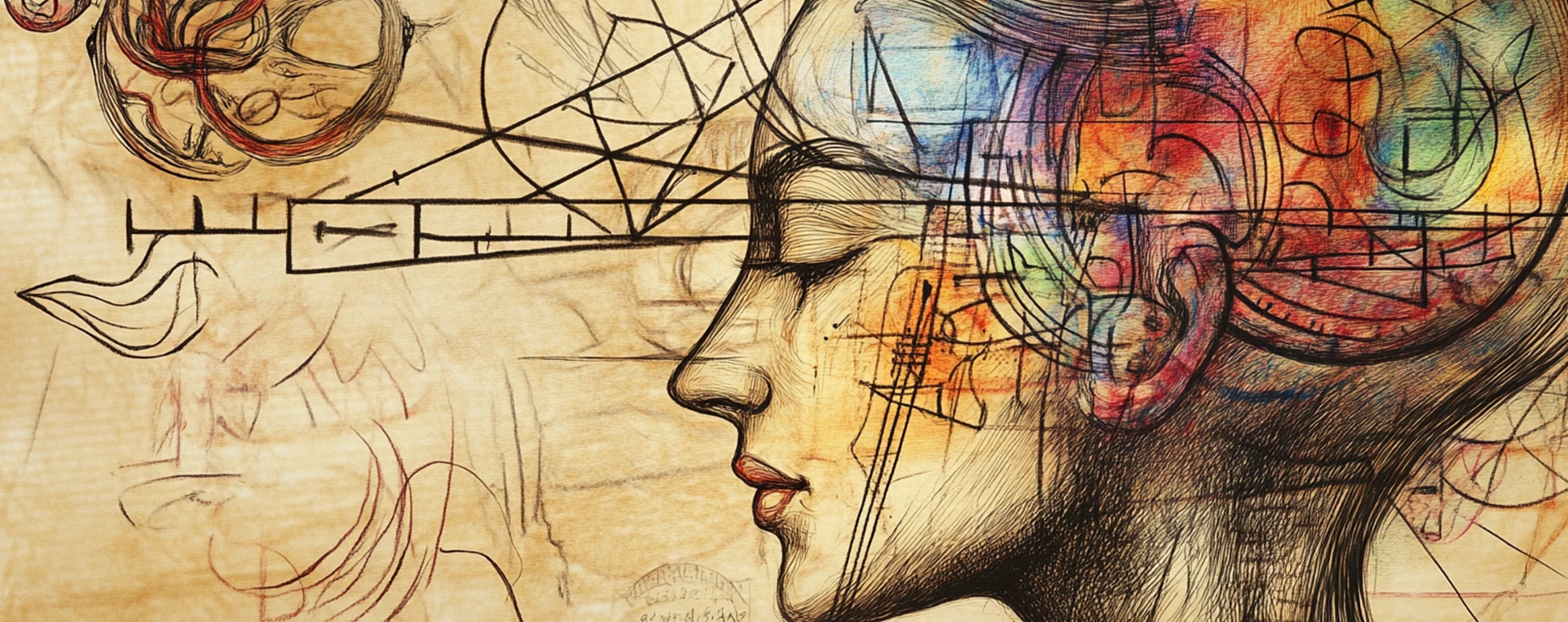 Introduction to the Philosophy of Mind
This course introduces students to issues and questions that have defined scholarship in the philosophy of mind as well as to prominent theories in the field.
Starting from Descartes and the articulation of a general "mind-body problem," we will go on to investigate particular mental phenomena (such as beliefs, emotions, sensations, and intentions) by considering what philosophers have said about them, drawing primarily from the 20th century and the analytic tradition. We will read works in Dualism, Identity-Theory, Functionalism, and Eliminativism.
Besides offering a brief survey of the field, this course will equip students with resources for evaluating whether some particular view provides an adequate account of human mindedness.
Remote